
Every Minute Matters: Time Management in a Virtual Private School
Time management is one of the biggest skills virtual school asks of SVPS students, and it's rarely taught directly. The good news: it is a skill, not a personality trait, which means it can be built with the right tools and a little practice. Better still, the time management habits a student builds now don't expire at graduation — they're some of the first things an employer will actually notice.
If your student is still finding their footing, start with the basics of structuring your virtual school schedule and then use this guide to fine-tune how those hours are used.
Why Is Time Management Harder in Virtual School?
Without a bell schedule or a teacher physically moving the class from one activity to the next, students have to generate their own sense of structure. That is a genuinely difficult skill, especially for younger students or those who process time differently.
The fix is not more willpower, but making time and tasks visible instead of expecting a student to track it all mentally. This is one of the areas where SVPS's smaller class sizes and direct teacher access make a real difference — a teacher who knows a student individually can spot a time management gap far earlier than a teacher managing thirty students at once, and can coach around it before it becomes a pattern.
How to Make Time and Tasks Visible
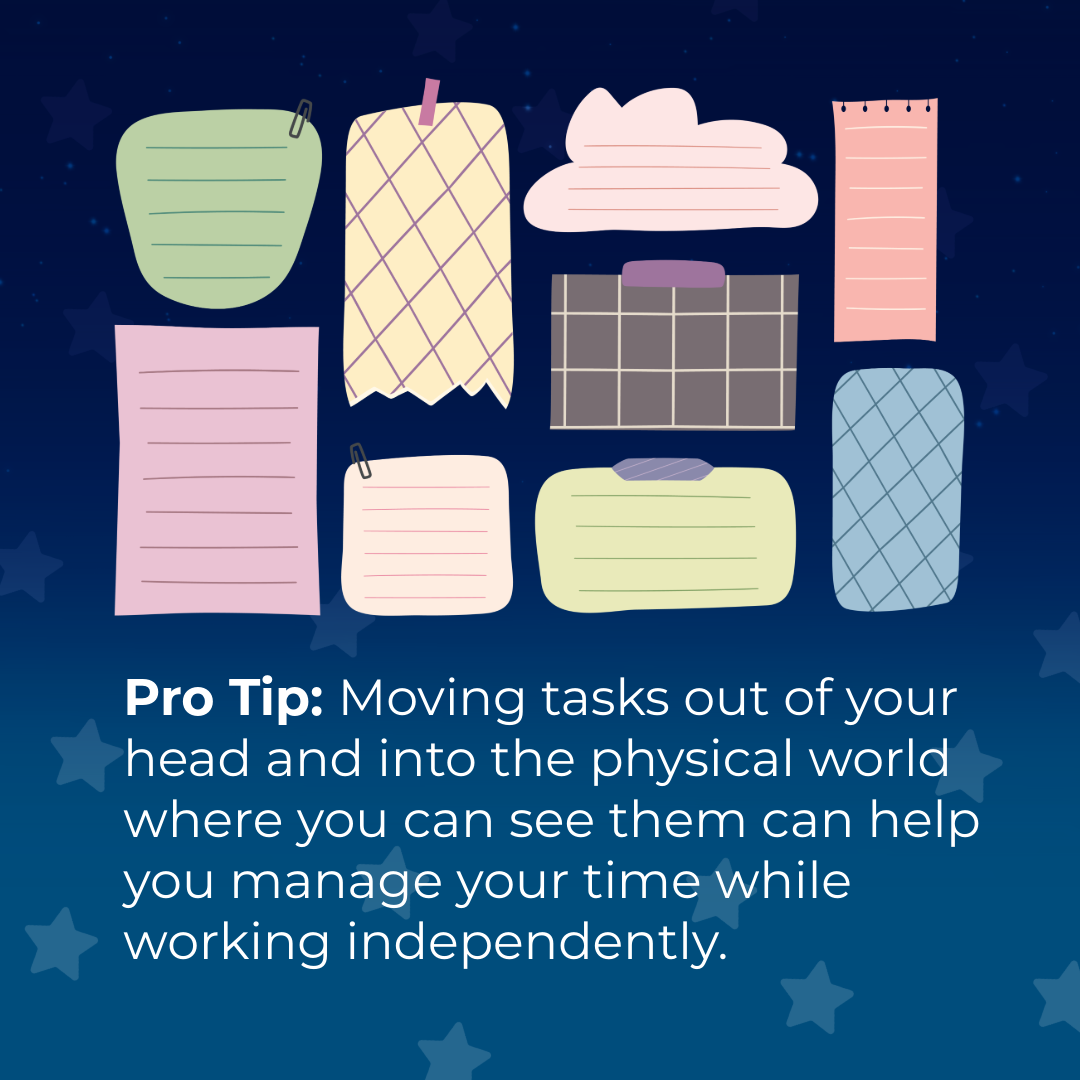
According to ADDitude, one of the most effective strategies for managing time and tasks is making both external — moving them out of your head and into the physical world where you can see them makes them easier to keep track of. A few practical ways to do this:
Visual task tracking: sticky notes, index cards, or a whiteboard list of what is due today
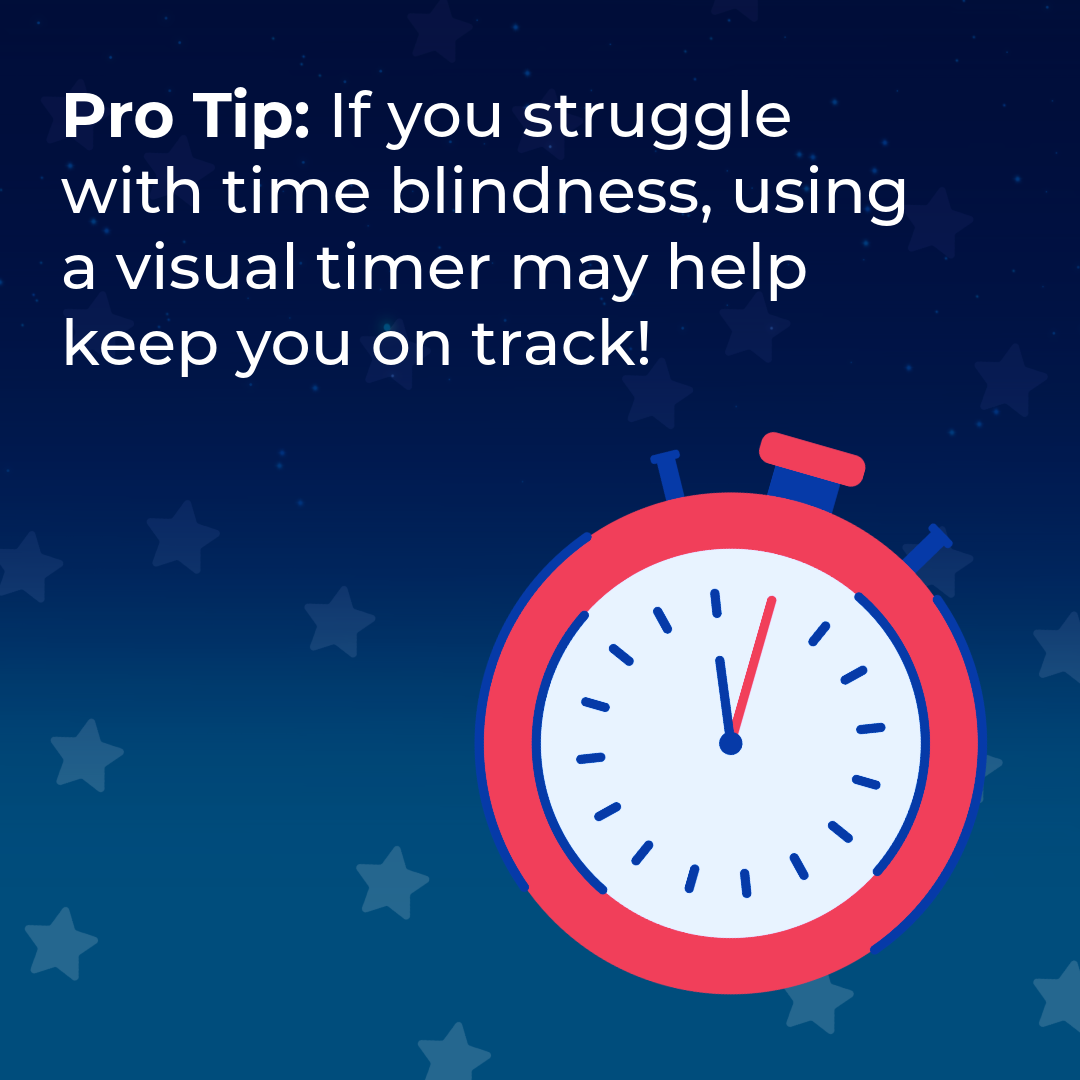
Visible timers: a physical or app-based timer that shows time passing, rather than trusting an internal sense of "it's probably been 20 minutes"
External motivation: simple accountability systems, like a point system, a shared checklist with a parent, or a report-card-style check-in
This is not just for students formally diagnosed with attention or executive function challenges. Nearly every student benefits from making time and priorities visible rather than holding it all mentally.
Time Management Strategies by Grade Band
The strategy that works for a high schooler will overwhelm a second grader, and one built for a young student will feel condescending to a teenager. Here's how to match the approach to where your student actually is.
Elementary & Middle School
Younger students benefit from external structure provided mostly by a parent: visual timers, picture-based checklists, and short, clearly bounded work periods. If you are new to the Learning Coach role, our Learning Coach quick-start guide covers how much support to offer at this age. Because class sizes at SVPS stay small, teachers are often able to reinforce the same visible-task system a family uses at home, rather than a student juggling two different approaches at school and at the kitchen table.
Once students move into middle school, they're ready to start owning parts of the system themselves, with a parent still checking in regularly. This is often the age where a student is first introduced to a calendar or planner. The more you let them personalize it — decorating it digitally or physically — the more likely they are to engage and feel ownership over their schedule.
High School
For students in grades 9–12, try letting them choose their own system and trust them to run it. Shift parent oversight into a lighter-touch, "ask how it's going" role rather than managing details directly. This helps them take ownership and responsibility for their education, which is vital as graduation approaches.
With college applications, standardized testing, and career planning all layered on top of the regular school year, collaboration between parent and student is vital to their success in and beyond the classroom. To help get older students started, send them our student guide to starting the year strong.
Wherever your student falls, the goal is the same: gradually shift ownership of time management from parent to student over the years, so that by graduation, it's a skill they've genuinely built themselves, not one they're still borrowing from a parent.
How to Build a Study Schedule Around Peak Focus
Two things determine how productive a study session actually is: how many hours are spent, and the quality of those hours. Three unfocused hours of scrolling between tabs accomplish far less than one genuinely focused hour.
The University of Washington's academic skills resources recommend starting by tracking how a typical day is actually spent, not how you assume it is spent. From there:
Notice when focus comes easiest (morning, afternoon, or evening) and protect that window for the hardest academic work.
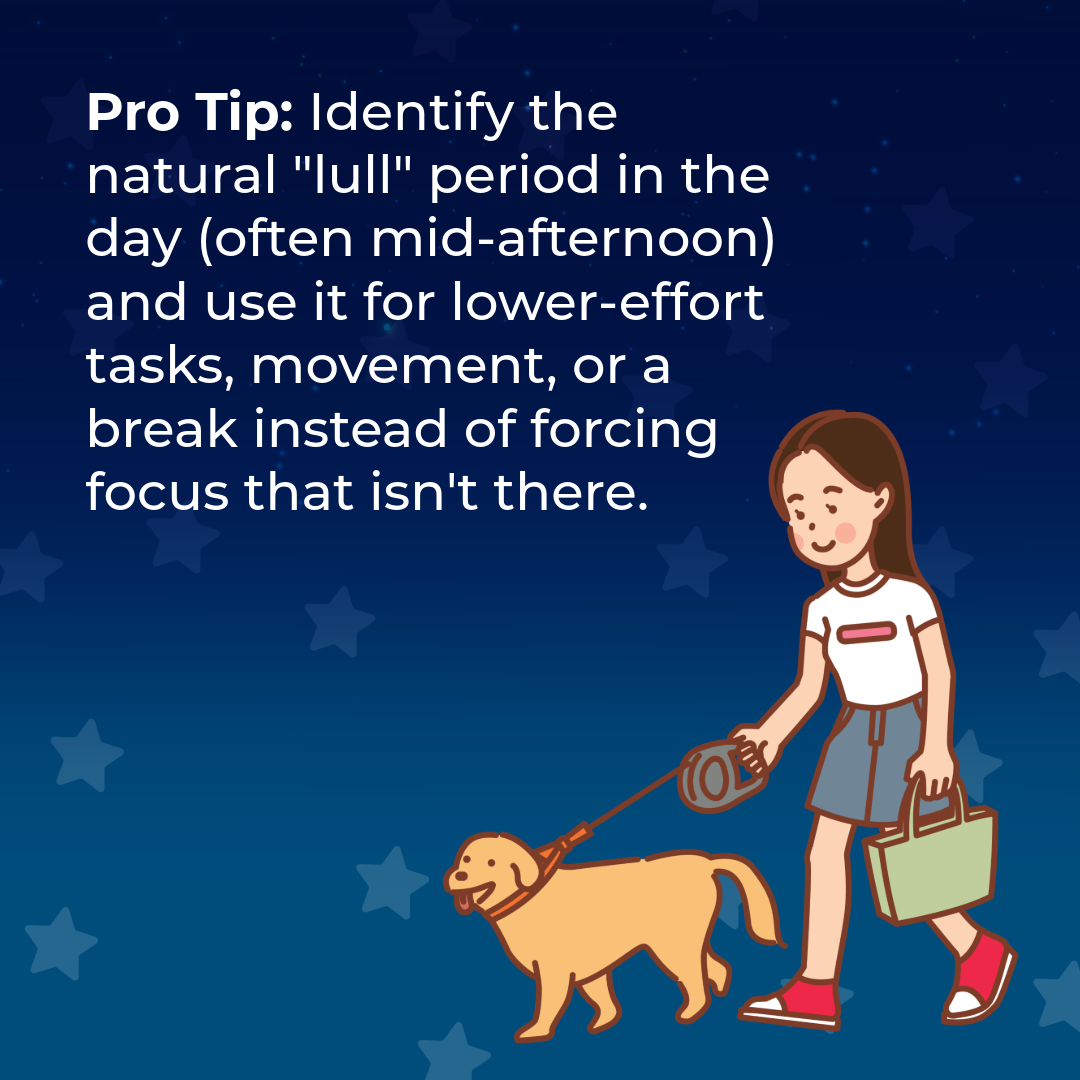
Identify the natural lull in the day, often mid-afternoon, and use it for lower-effort tasks, movement, or a break instead of forcing focus that isn't there.
Compare how time is being spent against what work is getting done, and adjust from there.
3 Time Management Systems to Try
Not every strategy works for every student. Here are three worth experimenting with, drawn from Penn LPS Online's overview of proven techniques:
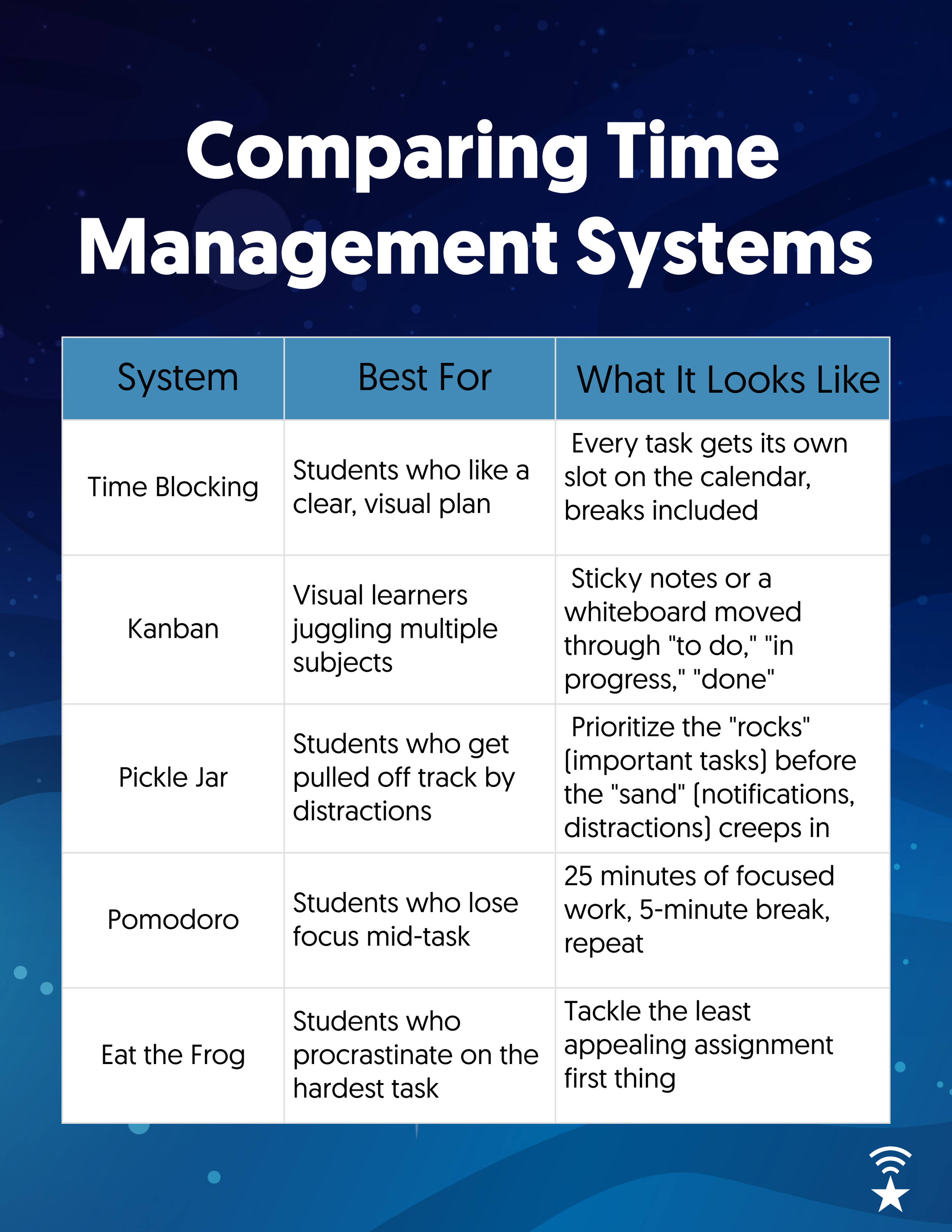
Time Blocking — Assign each task its own dedicated slot on the calendar, breaks included. Best for students who do well with a clear visual plan for the whole day.
The Kanban Method — Use columns, "to do," "in progress," and "done," on a whiteboard or with sticky notes to track tasks visually. Especially useful for visual learners or students juggling several subjects at once.
The Pickle Jar Method — Picture a jar with rocks (the most important tasks), pebbles (things that can wait), and sand (distractions like notifications). Tackle the rocks first, and don't let the sand fill the jar before the important work gets in.
Which Time Management System Is Right for Your Student?
There is no wrong choice here. The right system is whichever one actually gets used, week after week.
How Do You Know a Time Management System Is Working?
You'll know an approach is a good fit when assignments start earlier in the week instead of the night before, your student can tell you what's due without checking three different places, and there's noticeably less last-minute stress around deadlines. Standardized testing season then becomes less of a source of anxiety and more of an opportunity to put those time management skills into practice.
If a system isn't sticking after a couple of weeks, that's useful information. Try a different one rather than assuming your student simply isn't trying hard enough.
How to Do a Weekly Time Audit (5 Steps)
If you're not sure where your student's time is actually going, a simple audit can be more revealing than weeks of guessing.
Pick a representative day. Choose a typical school day, not an unusually busy or unusually light one.
Track everything in rough blocks. Every hour or half hour, jot down what actually happened, not what was supposed to happen.
Sort the results into categories. Academic work, breaks, meals, screen time that wasn't schoolwork, and everything else.
Compare the totals to your priorities. Does the actual time spent line up with what matters most, or is there a gap worth addressing?
Make one small change, not ten. Pick the single biggest gap and adjust just that one thing for a week before layering on more.
An honest audit, done without judgment, often reveals surprisingly simple fixes: a homework block that keeps getting swallowed by a "quick" phone check, or a peak-focus hour currently spent on the easiest, least important task of the day.
How Time Management Skills Built Now Support Career Readiness Later
The time management habits a student builds at SVPS don't stay in the classroom — they're one of the specific competencies employers say they look for by name. The National Association of Colleges and Employers (NACE) identifies "Professionalism/Work Ethic" as one of its eight core career readiness competencies, and defines it in part as the ability to demonstrate personal accountability and effective work habits, including time and workload management. In other words: the skill your student is practicing this week with a homework planner is the same skill a hiring manager will be evaluating years from now.
That overlap is worth taking seriously, and it's a place where a smaller, more personalized learning environment has a real advantage. A student managing their own schedule in a self-directed virtual classroom is already practicing something closer to real workplace autonomy than a student moving through a tightly bell-scheduled day — nobody is walking them from one task to the next. Building that skill with individualized teacher support, rather than being left to sink or swim, means a student develops the habit correctly the first time instead of picking up workarounds that don't hold up under real deadlines.
A few ways this connection shows up concretely, well before graduation:
Self-paced coursework mirrors project-based work. Managing multiple assignments with different due dates, without a teacher physically checking in every hour, is close practice for managing overlapping projects and deadlines in almost any career.
Digital tools carry over directly. The calendars, task boards, and shared checklists a student uses for school are the same categories of tools they'll use to manage a job — the specific app may change, but the underlying habit doesn't.
Small class sizes make coaching, not just consequences, possible. When a teacher has the bandwidth to notice a student's time management slipping and talk through why, rather than simply recording a late grade, the student walks away with a strategy instead of just a grade. That kind of individualized feedback loop is difficult to replicate at scale in a larger classroom, and it's exactly the kind of support a personalized learning environment is built to provide.
Early ownership builds real self-advocacy. A student who has practiced managing their own time since middle school arrives at their first job, internship, or college course already comfortable owning a deadline — rather than encountering that expectation for the first time as an adult.
None of this replaces academics, of course — but it's worth naming plainly for families weighing what a personalized education actually buys beyond content mastery. A student who leaves SVPS with strong time management instincts is leaving with a documented, named, employer-recognized competency, not just a good habit.
4 Time Management Myths Worth Retiring
Myth: "Good students just naturally manage their time well." Time management is a learned skill, not an innate trait. Even highly capable students need explicit tools and practice, and these skills often follow them into professional settings later on.
Myth: "More hours studying always means better results." Quality of focus matters more than raw hours. A focused 45 minutes often beats a distracted two hours.
Myth: "Needing a timer or checklist means something is wrong." External tools are a legitimate, permanent strategy for plenty of highly successful people, not training wheels to discard.
Myth: "If a system worked for one student, it will work for another." Every student's brain is a little different. Trying more than one system before settling is normal, not a failure.
Frequently Asked Questions
How long does it take for a new time management system to stick?
Give any new system at least two full weeks before deciding whether it's working. The first few days almost always feel clunky. That's normal, not a sign of failure.
What if my student resists using a planner or checklist?
Start smaller than feels sufficient. A single sticky note with today's top three tasks is often an easier entry point than a full weekly planner. Build the habit before adding complexity.
Is it bad if my student needs a timer for everything?
Not at all. External tools like timers aren't a crutch — they're a legitimate strategy that plenty of highly successful students and adults rely on permanently.
Who can I ask for help if my student is falling behind?
Your student's teacher is the fastest path to a fix. Here's how to reach your virtual school teachers and what to ask for.
Time Management Is a Skill, Not a Character Trait
Every student can get better at managing their time with the right structure in place. Making time and tasks visible, protecting focus during peak-energy hours, and choosing a system that fits how your student thinks turns time management from a source of stress into a genuine strength — one that colleges and employers will recognize long after this school year ends.
Ready to help your student master their time, and their school year? Enroll Today
Have questions? Our enrollment specialists are ready to help: Call Today!
Follow along for more Insights: Facebook | Instagram | TikTok
Sources
ADDitude, Treatments and Strategies for Weak Executive Functions. additudemag.com
University of Washington, Disability Resources for Students, Structuring Your Day. washington.edu
Penn LPS Online, Mastering Your Schedule: Effective Time Management Strategies for Success. lpsonline.sas.upenn.edu
National Association of Colleges and Employers (NACE), Career Readiness Defined. naceweb.org
